Polity & Governance | GS II
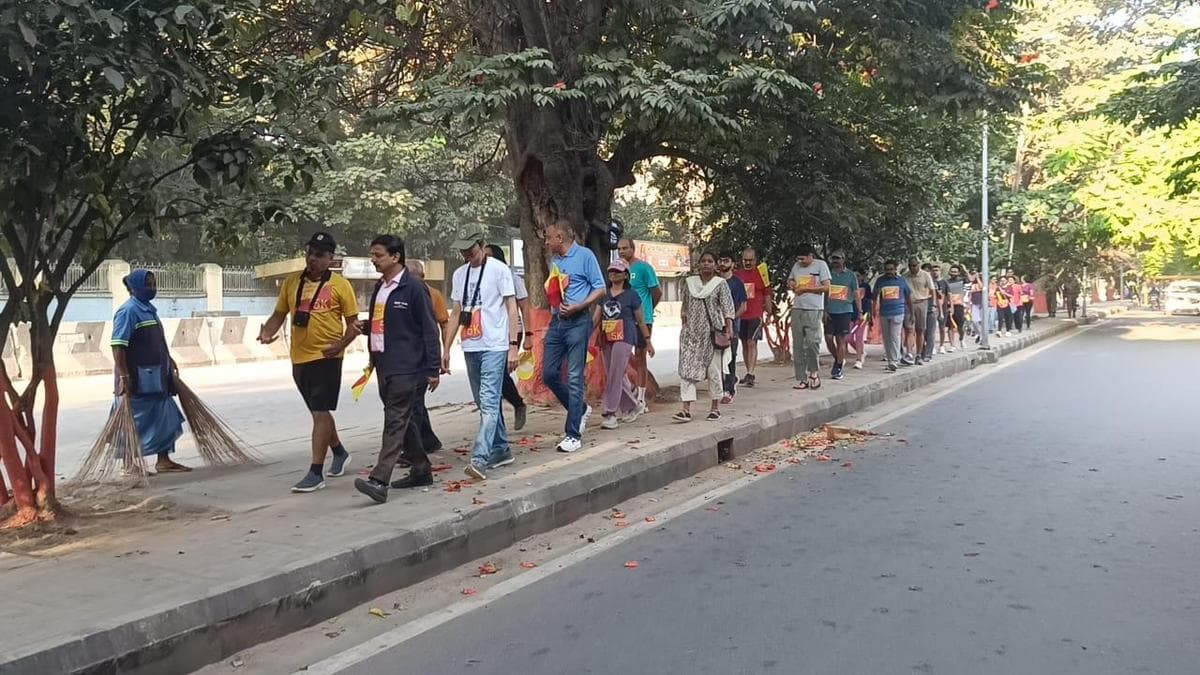
In Maniyar Iliyaz @ Shaik Riyaz v. P. Ayyappan (2026), the Supreme Court held that the right to walk on demarcated, safe and well-maintained footpaths is a fundamental right and called for a statutory framework and dedicated regulator to protect pedestrian rights.
What is the constitutional basis for the Right to Walk?
- Article 14: Equal access to public spaces and public infrastructure is integral to substantive equality.
- Article 19(1)(d): Guarantees freedom of movement throughout the territory of India.
- Article 19(1)(a), 19(1)(b) & 19(1)(c): Walking enables freedom of expression, peaceful assembly, and formation of associations.
- Article 21: Safe mobility is linked to Right to life, Dignity, and Personal safety.
- Article 39(b): Material resources of the community must be distributed to subserve the common good.
- Public Trust Doctrine: Roads and footpaths are public resources held by the State in trust for citizens and cannot be monopolised by competing interests
- Judicial Position: If a road exists, there must be a corresponding duty on the State to provide and maintain a safe footpath.
Why are footpaths more than just safe spaces?
- Walking as a constitutional freedom: Walking is not merely movement. It enables expression, congregation and association.
- Walking as a social equaliser: Most accessible mode of transport. Particularly important for:
- Poor households,
- Children,
- Elderly persons,
- Persons without private vehicles.
- Walking as access to public space: Provides access to common spaces and public life. Enhances inclusiveness of cities.
- Walking as democratic participation: Historically associated with Public mobilisation, Labour movements, Freedom struggle, and Peaceful protest.
How did the court reinterpret footpaths?
The Court viewed,
- Footpaths as public resources held in trust for citizens
- Footpaths should not be monopolised by competing interests
- Public authorities must ensure equitable access
- Pedestrian access is part of the constitutional idea of common spaces
- The Court emphasised that rights become meaningful only when backed by institutions citing Right to Education Act (RTE), 2009 which,
- Operationalised Article 21A
- Established enforcement architecture
Recognised the National Commission for Protection of Child Rights (NCPCR) as regulator
The Court suggested a similar model for pedestrian rights:
- A statutory framework for pedestrian rights
- Identification of duty-bearers
- Enforcement mechanisms
- Grievance-redress systems
- A dedicated regulator.
Why have pedestrian rights weakened?
Structural issues
- Vehicle-centric planning: Urban development prioritised motor vehicles over pedestrians. Footpaths treated as residual spaces.
- Inadequate pedestrian infrastructure:
- Fragmented governance framework:
- Regulatory vacuum: No dedicated legislation governing pedestrian rights. Existing laws focus largely on vehicular movement.
- Weak implementation of the Street Vendors Act, 2014:
Governance issues
- Failure of duty-bearers: Primary responsibility rests with:
- Common-good principle not reflected in planning: Public authorities often prioritise motor vehicles over pedestrian access despite constitutional obligations under Article 39(b).
- Lack of accountability: No specialised institution exists to ensure continuous protection of pedestrian rights.
Social and behavioural issues
- Walking Treated as a Nuisance: Motorised transport dominates public spaces. Pedestrians are often treated as secondary road users.
- Encroachments and fragmentation: Footpaths occupied by Parking, Utilities, Construction debris, and Other competing uses.
- Weak Civic and Institutional Support: Citizens are expected to comply with civic obligations while walking has gradually lost priority in urban design and governance.
How can pedestrian rights be protected?
Incremental measures
- Enact a statutory framework recognising pedestrian rights.
- Clearly identify duty-bearers responsible for footpaths.
- Provide quick remedies for violations.
- Integrate pedestrian safety into urban planning.
Disruptive measures
- Establish a full-time pedestrian regulator.
- Create specialised institutional expertise for planning and enforcement.
- Institutionalise pedestrian rights through a dedicated regulatory architecture similar to the RTE framework.
- Shift transport governance from vehicle-centric to pedestrian-inclusive design.
- Treat pedestrian infrastructure as a constitutional obligation rather than a municipal amenity.
Conclusion:
The right to walk transforms footpaths from civic amenities into constitutional infrastructure, requiring governments to guarantee safe, inclusive and accessible public spaces through law, institutions and accountable urban planning.
________________________________________________________________________________________________
News to MCQs
Which of the following Fundamental Rights did the Supreme Court associate with walking on footpaths? Freedom of Speech and Expression, Freedom of Assembly, Freedom of Association
Select the correct answer:
(a) 1 only
(b) 1 and 2 only
(c) 2 and 3 only
(d) 1, 2 and 3
Answer: D
__________________________________________________________________________________________________
Give it a try
The right to walk is increasingly emerging as a constitutional question of urban equality rather than merely a matter of road safety." Examine. (10 Marks, 150 Words)